PhD
Boeing 787 airline pilot and human factors scientist whose work bridges frontline flight operations, academic research, and global safety policy — reimagining risk management through emotional intelligence, psychological safety, human performance risk intelligence, and ethical AI.
About
Kimberly Perkins, PhD holds two academic appointments at the University of Washington: Affiliate Assistant Professor in Human Centered Design and Engineering (College of Engineering) and Affiliate Associate Professor at the Evans School of Public Policy and Governance. She is also a Boeing 787 airline pilot with over two decades of experience in both business and commercial aviation.
In her academic role, Kimberly leads a graduate research team focused on the intersection of psychosocial risk, emotional intelligence, and effective communication in safety-critical teams. Her work bridges academic rigor with frontline operational expertise, offering a dual perspective that informs the design of adaptive, resilient systems.
Kimberly is the co-founder of Abri Labs where she is co-architect of ABRI, an aviation-specific Human Performance Risk Intelligence platform designed to support both individuals and organizations.
Beyond aviation, she is committed to advancing literacy and mental wellbeing for children displaced by conflict through her service on the board of the nonprofit Rise Up and Read. She resides in Seattle, Washington.

Recognition & Affiliations
2026
Flight Safety Foundation
2025
United Airlines · Technology-enabled innovation for women in aviation
2025
Women in Aviation International · Executive Leadership, Harvard
Fellow
Royal Aeronautical Society
Member, hpX Council
CAE Human Performance Excellence
Board Member
Rise Up and Read
Member
European Association for Aviation Psychology
Technician Membership
Aerospace Medical Association
Research
Dr. Perkins's research reimagines risk management for aviation by integrating behavioral science, emotional intelligence, psychological safety, and ethical AI, into the frameworks and systems that govern how people perform under pressure. She leads the Aviation Lab at UW, directing a multidisciplinary graduate team focused on aviation mental health, system design innovation, and psychosocial risk management.
Visit the Aviation Lab @ UW →Reimagining aviation Safety Management Systems through a behavioral science lens, integrating psychosocial risk indicators and resilience frameworks into operational safety practice.
Studying the invisible layers of performance, including social dynamics, emotional regulation, and team culture, that determine whether highly trained people thrive, adapt, speak up, or go silent.
Exploring how ethically grounded AI can enhance safety outcomes and human well-being within sociotechnical aviation systems, without displacing human judgment at critical decision points.
Directing multidisciplinary research on mental health support structures, stigma reduction, and psychological resilience for aviation professionals, with a focus on practical, deployable interventions.
Aviation Lab @ UW · Graduate Research
DRGs bridge rigorous academic scholarship with policy-relevant, operationally grounded outcomes, connecting student researchers directly to the industry challenges their work is designed to solve. A flagship output of the DRGs is aviationresearch.info, a living literature review written as an Op-Ed for the aviation community, featuring an interactive, searchable index of peer-reviewed aviation mental health literature that translates academic evidence into accessible insight for pilots, safety professionals, and policymakers.
Publications
Peer-reviewed journals and conference proceedings
Chawla, D. K., Zheng, Y., Larson, S., Lat, H., Key, S., & Perkins, K. (2026). Understanding pilots' perceptions of AI-mediated mental health support in aviation: A socio-technical framework. CHI EA '26, ACM.
doi: 10.1145/3772363.3798996 →Perkins, K., Mattioli, F. (2026). CRMSON: Co-Designing Adaptive and Ethical AI Systems to Address Mental Health Barriers in Aviation. IHSI 2026, AHFE Open Access, vol 200.
doi: 10.54941/ahfe1007062 →Perkins, K., Merola, R., Hasan, T. (2025). From Awareness to Action: Mapping Emotional Intelligence to Pilot Performance and Policy Reform in Aviation Mental Health. AHFE Open Access, vol 199.
doi: 10.54941/ahfe1006991 →Zheng, Y., Chawla, D., Perkins, K. (2025). Digital Copilots: Advancing Pilot Mental Health Through AI Chatbots and Systems. AHFE Open Access, vol 199.
doi: 10.54941/ahfe1007021 →Perkins, K. (2024). Enhancing Flight Deck Resilience and Optimizing Risk Mitigation: A Sociotechnical Approach. AHFE Open Access, vol 159.
doi: 10.54941/ahfe1005764 →Perkins, K., Ghosh, S., & Hall, C. (2024). Interpersonal Skills in a Sociotechnical System: A Training Gap in Flight Decks. Journal of Aviation/Aerospace Education & Research, 33(2).
doi: 10.58940/2329-258X.2022 →Perkins, K., Merola, R. H., Ghosh, S., & Aragon, C. (2024). 'I'm a Pilot First, Female Second': Why Flight Deck Gender Imbalance Persists and the Case for Allyship. Journal of Aviation/Aerospace Education & Research, 33(2).
doi: 10.58940/2329-258X.2025 →Perkins, K., Ghosh, S., Vera, J., Aragon, C., & Hyland, A. (2022). The Persistence of Safety Silence: How Flight Deck Microcultures Influence the Efficacy of Crew Resource Management. International Journal of Aviation, Aeronautics, and Aerospace, 9(3).
doi: 10.15394/ijaaa.2022.1728 →AeroSafety World journal contributions
Practitioner publications and policy contributions
Marsh · Podcast
Prioritizing Mental Health to Enhance Aviation Safety
Integrated support systems, peer programs, and AI-enabled tools as scalable approaches for improving resilience, early intervention, and overall aviation safety performance.
Price Forbes · Article
The Human Variable: Integrating Psychosocial Risk into Aviation Risk Management
Post-conference write-up exploring how psychosocial factors — fatigue, chronic stress, psychological safety, and organizational culture — function as direct operational variables in aviation safety.
Platform · Abri Labs
ABRI is an aviation-specific Human Performance Risk Intelligence platform built alongside pilots, instructors, safety leaders, and human factors experts to ensure it is operationally grounded, ethically designed, and practical for everyday aviation. It provides aviation professionals with private, evidence-based coaching and support while delivering organizations only aggregate, de-identified insights that help identify emerging human performance risks, strengthen organizational culture, and proactively improve safety, without compromising individual privacy.
Learn more about Abri Labs →Speaking & Media
Speaking
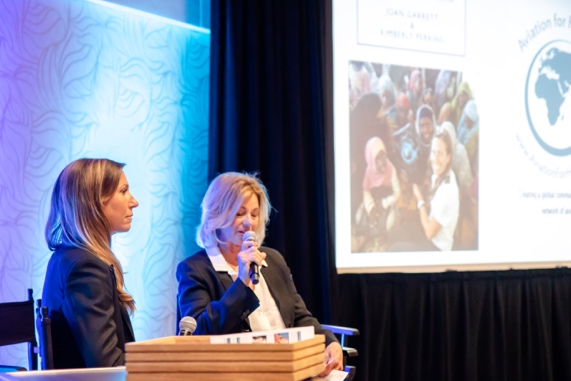
Women in Aviation Leadership Forum
Panel discussion on equity, leadership, and safety culture in aviation
Media
Citizens of Seattle Campaign
Citizen M Hotel · Representing aviation in their local Seattle campaign
Recognition
NBAA Top 40 Under 40
National Business Aviation Association, 2020
Media
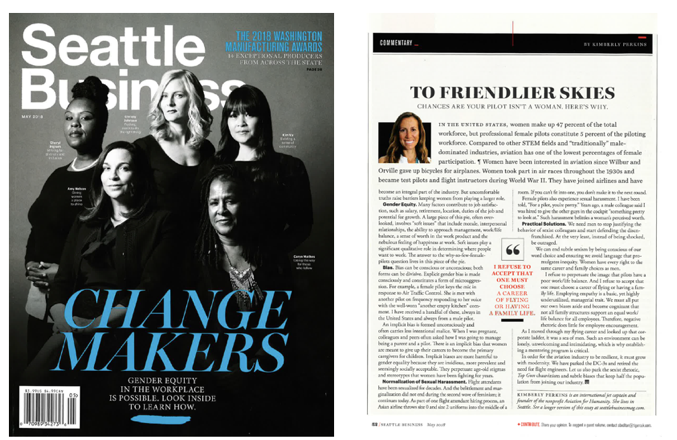
Change Makers · To Friendlier Skies
Seattle Business Magazine, May 2018
Publication
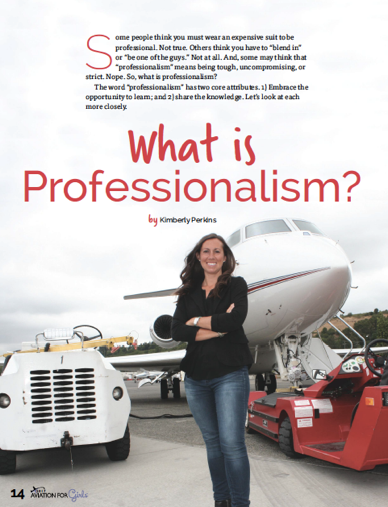
What is Professionalism?
Aviation for Girls, 2017
Publication
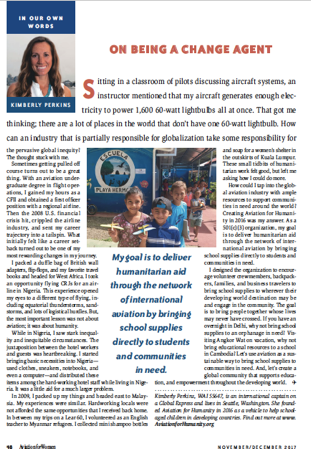
On Being a Change Agent
Aviation for Women, Nov/Dec 2017
Op-Ed
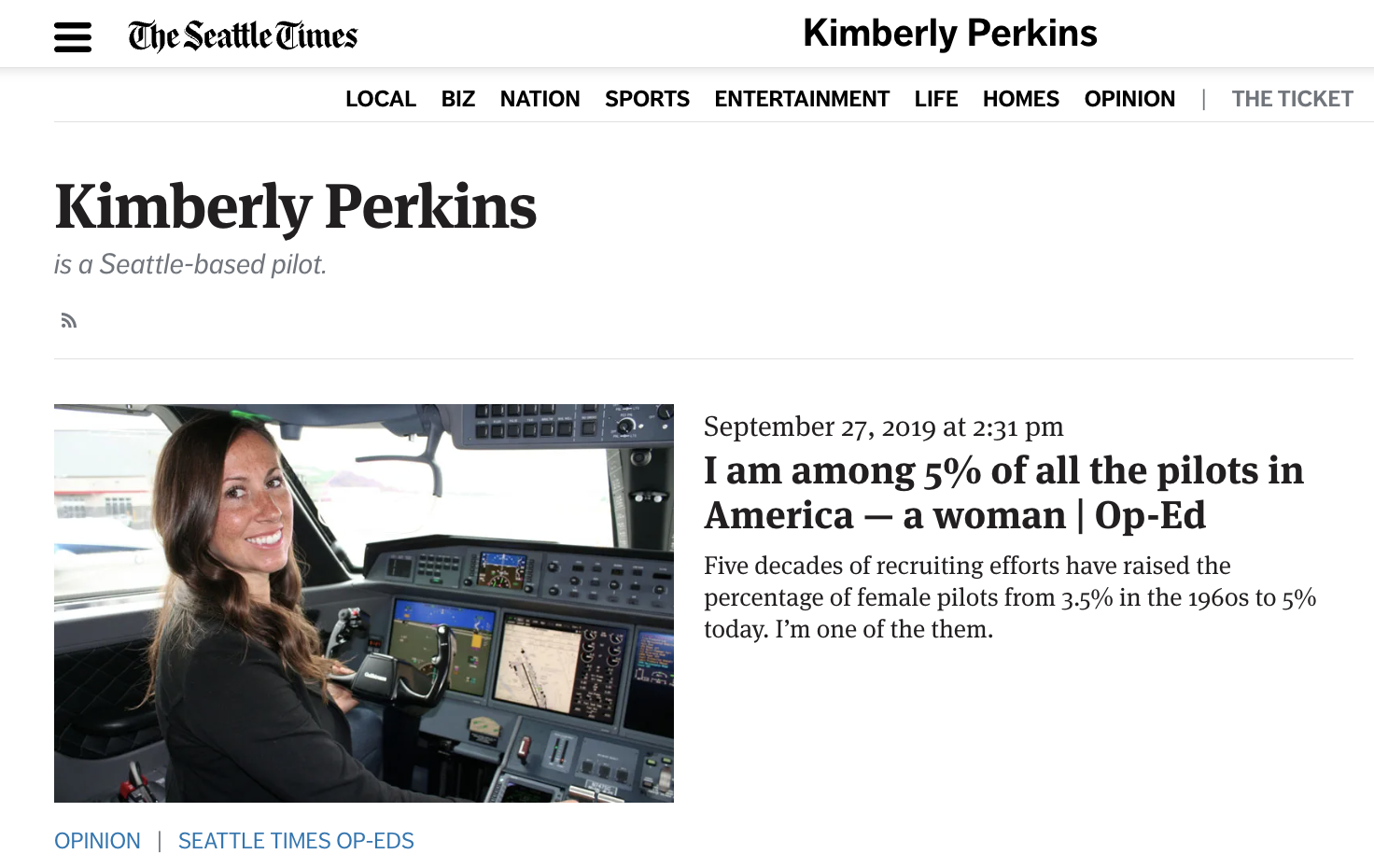
I am among 5% of all the pilots in America — a woman
The Seattle Times, Sep 2019
Podcast
Aviation: A Case Study on Inequality
The Fix Podcast, Jun 2020
Philanthropy
Aviation for Humanity
Delivering school supplies to communities in need
Speaking
Marsh Aviation Summit
London, England · 2026
Price Forbes Aviation Risk Conference
Bogotá, Colombia · 2026
IHSI International
Florence, Italy · 2026
Flight Safety Foundation, International Aviation Safety Summit
Lisbon, Portugal · 2025
PACDEFF
Sydney, Australia · 2025
Skyservice
Montreal, Toronto & Calgary · 2025
Applied Human Factors & Ergonomics Conference
Honolulu, HI · 2024
International Aviation Safety Summit, Flight Safety Foundation
Rio de Janeiro · 2024
Airline Standards Meetings
Aug–Oct 2023
Business Aviation Safety Consortium
Feb 2023
Safety Symposium, Air Charter Safety Foundation
Apr 2022
Airline Human Factors Roundtable, Hawaiian Airlines
Feb 2022
ATI Boeing Accelerator — Creating a Sustainable Aerospace Industry
Sep 2020
NBAA — Diversity and Inclusivity Panelist
Las Vegas · Oct 2019
Pratt & Whitney Canada — Changing the Conversation
Montreal · Nov 2019
IAWA — General Aviation Women's Leadership Forum
Napa, CA · May 2019
Writing
Aviation International News · Feb 2022
Aviation International News · Jul 2021
Aviation International News · Mar 2021
AeroTime · Jul 2020
Aviation International News · Mar 2020
The Seattle Times · Sep 2019
Aviation International News · Apr 2019
Seattle Business Magazine · May 2018
Aviation International News · Mar 2018
On Being a Change Agent
Aviation for Women · Nov/Dec 2017
What is Professionalism?
Aviation for Girls · May 2017
Impact
UW Graduate School · Sep 2021
FAA · Mar 2022
NBAA · Mar 2021
Virginia Dept. of Aviation · Jan 2021
JDA Journal · Aug 2020
Press
As the Subject
Women Who Win · Oct 2020
The Female Lead · Sep 2020
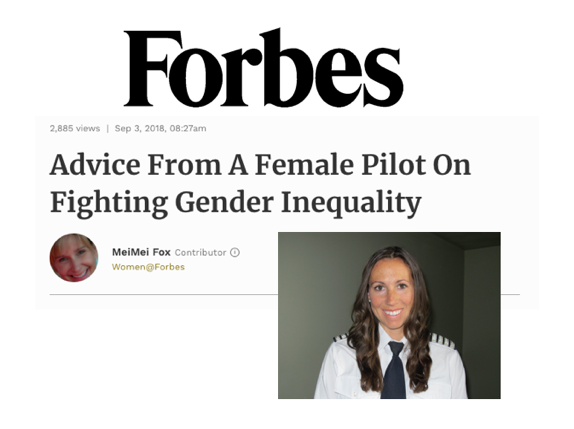
Forbes · Sep 2018
Seattle Business · Aug 2018
Flying the World – Kimberly Perkins
Aviation for Women · Nov/Dec 2015
As a Contributor
NBAA Business Insider · Mar 2020
Incredible People Making Aviation a Force For Good
Ops Group · May 2019
Nonprofit Seeks Volunteers for School Supplies Delivery
AIN · Apr 2018
Business Aviation Gives Back Globally — One Backpack at a Time
NBAA · Apr 2018
Media
Citizen M Hotel — Citizens of Seattle Campaign
Spring 2020
Feb 2018
Oct 2019
Get in Touch
Whether you're interested in research collaboration, speaking invitations, media inquiries, or connecting around shared interests in aviation safety and human performance.
Institution
University of Washington, Seattle
Department
Human Centered Design & Engineering
Thank you.
Your message has been received. I'll be in touch shortly.